
Winter Skin Care Routine: A Dermatologist-Backed Guide for Dry Skin
You spot extra strands in the shower drain, then notice your parting looks wider. Is it hair thinning or hair fall? Most people use the terms interchangeably, but dermatologists treat them differently.
Getting the hair thinning vs hair fall question right is the first step toward the right fix, and it can save you months of trying the wrong products.
ri
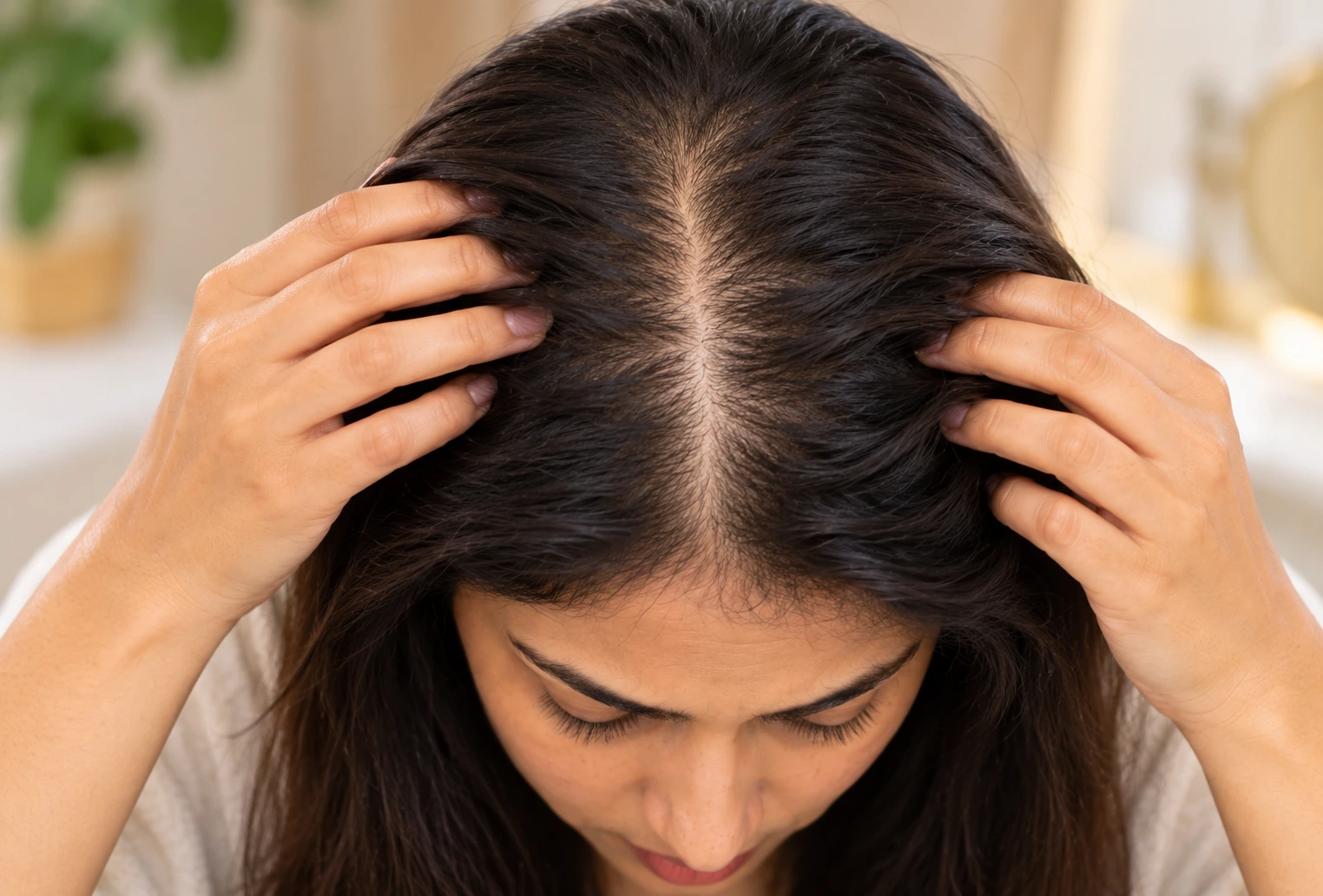

Here is the simplest difference between hair fall and hair thinning:
Hair Fall | Hair Thinning | |
What you notice | Clumps on the comb, pillow or drain | Wider parting, less volume, visible scalp |
Speed | Often sudden, over weeks | Gradual, over months or years |
Follicle | Usually healthy | Often shrinking (miniaturisation) |
Typical trigger | Stress, illness, diet, hair habits | Genetics, hormones, ageing |
Outlook | Often reversible once the trigger is fixed | Needs ongoing care to maintain results |
The two can overlap. Someone with slow pattern thinning can also have a stress-triggered shedding episode, which makes the change feel sudden.
Most hair fall causes are triggers your body reacts to. Shedding usually shows up two to three months after the trigger, so think back over the last quarter: a fever, a crash diet, a stressful move.
If you’re shedding more than usual, our hair fall treatment page explains how Dr. Katkar finds the cause first.
Hair thinning causes work slowly, so many people notice them only years in. Each growth cycle, the affected follicle produces a slightly finer hair, until the scalp starts to show.
The pattern differs by gender. Men usually see a receding hairline or crown thinning. Women usually see a wider parting and overall loss of volume, with the hairline mostly preserved.
Hair fall that settles within a few months usually leaves no lasting change. Trouble starts when the trigger keeps going: untreated thyroid problems, ongoing deficiency, constant tension from tight styles, or an inflamed scalp. Follicles that keep cycling under stress can regrow weaker each time, and what began as shedding turns into reduced density.
That is why a long episode of hair fall is worth checking early, before the follicles are harder to recover.
Use this quick checklist:
This is a guide, not a diagnosis, because both can happen together.
A good consultation looks beyond the hair. The doctor examines your scalp and hair density, reviews your medical history, diet, stress and recent illnesses, and may do a hair pull test. Blood tests for iron, thyroid or vitamin levels are added when the picture points that way. The aim is to name the cause, because treatment works best when it targets the reason for the hair loss rather than the symptom alone.

The right hair thinning treatment depends on the cause, so diagnosis comes first.
Looking for hair thinning treatment in Nagpur? A proper scalp evaluation matters more than any single product, because treating shedding like thinning (or the reverse) wastes months.
Habits won’t fix pattern thinning on their own, but they help treatment work.

The hair thinning vs hair fall question comes down to this: hair fall is a signal to find and remove a trigger, while hair thinning is a longer game that works best when started early. Guessing is the slowest route.
Book a scalp consultation with Dr. Shraddha Katkar at Revola Skin & Hair Clinic, Bajaj Nagar, Nagpur, and get a clear diagnosis before you start treatment.
Noticing excess shedding or a wider parting? Our dermatologists in Nagpur can assess your scalp, identify the cause and guide you toward the right hair treatment.

At Revola Skin & Hair Clinic, we pride ourselves on having a team of expert dermatologists and the best skin doctor in Nagpur, dedicated to solving any skin or hair-related issues.
Revola Skin and Hair Clinic 1st floor, Block No. B-1, Srinivas Apartment, Bajaj Nagar, Nagpur, Maharashtra 440010
© 2026 Revola Skin and Hair Clinic | All Rights Reserved